
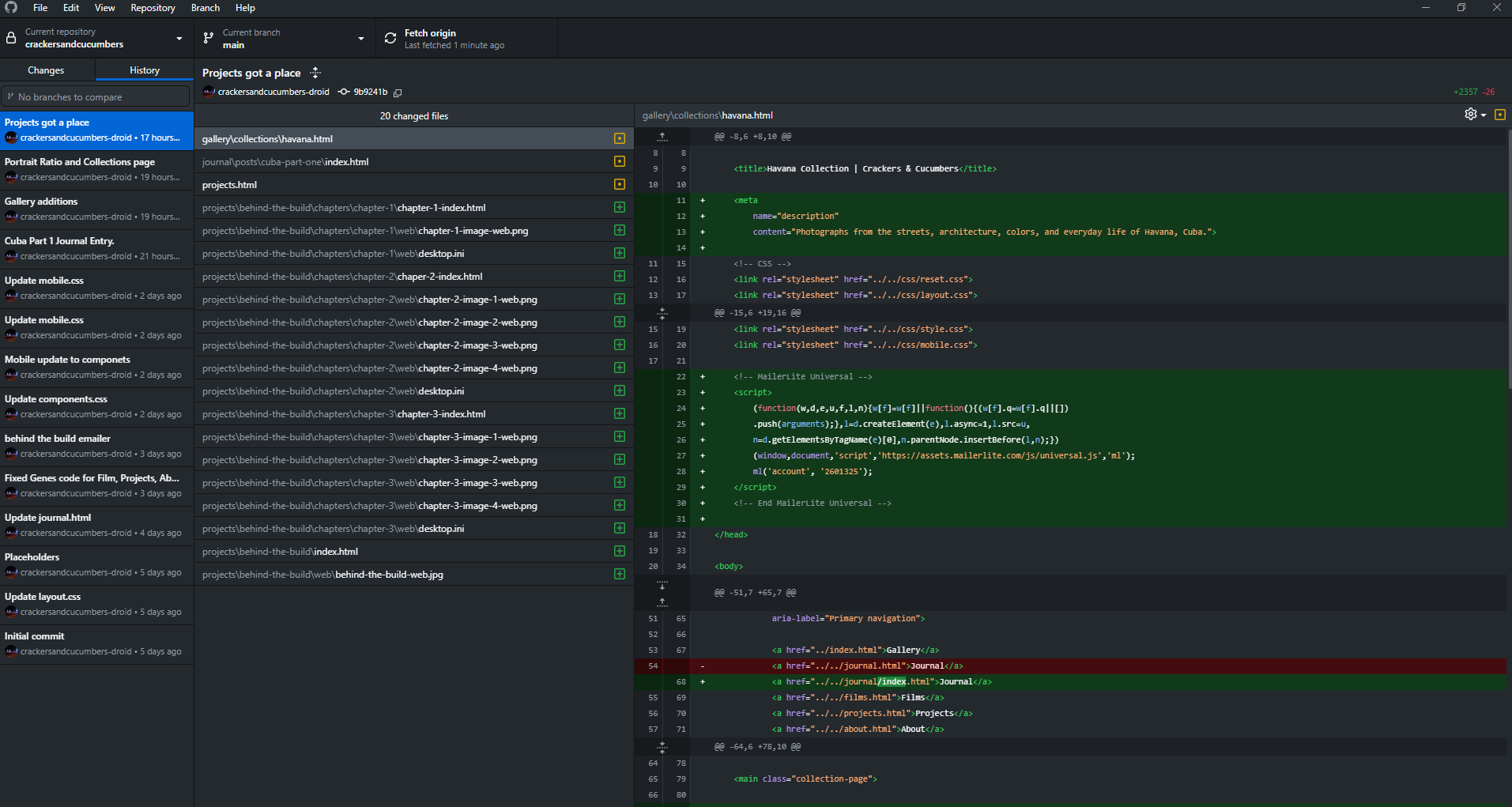
At first, progress was difficult to recognize.
We could spend hours building a page, adjusting the spacing, correcting paths, and trying to understand why one small change had affected something on the other side of the website.
Then we would open the preview and find a page with no styling, missing images, blue links, and text stacked against the side of the browser.
One misplaced folder level could make the entire website appear broken.
One missing bracket in a stylesheet could quietly undo work that had taken most of the morning.
It did not always feel like we were building something.
Sometimes it felt like we were repeatedly discovering new ways to break it.
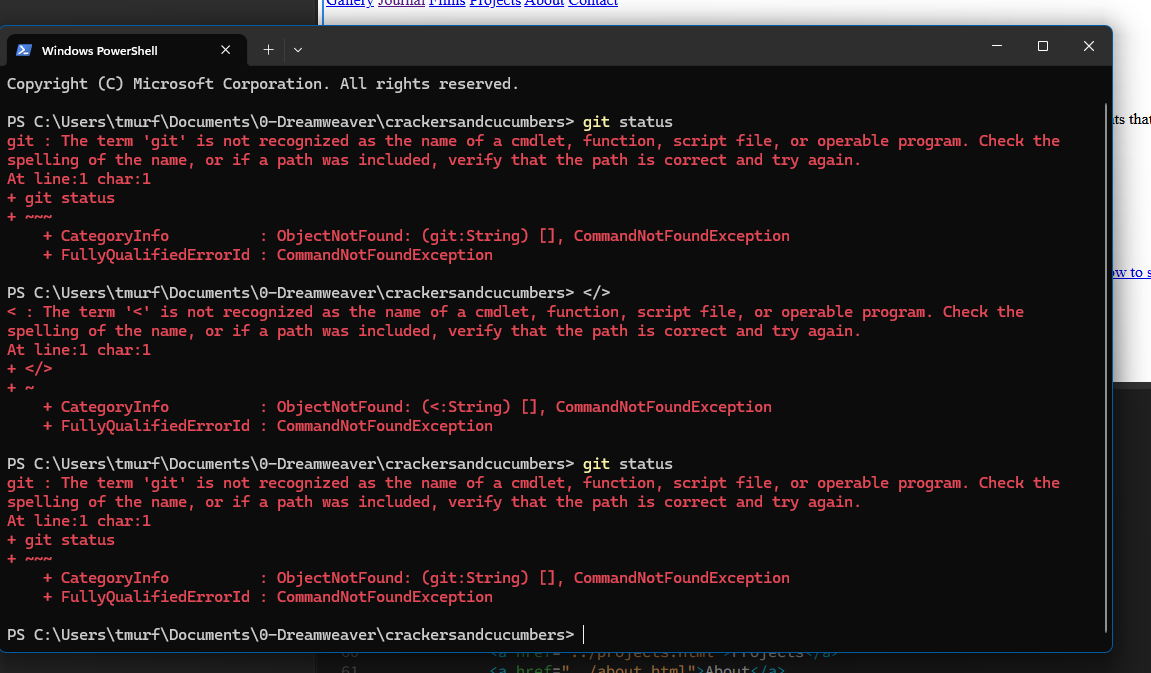
There were also tools we thought we understood until we tried to use them.
GitHub. Cloudflare. PowerShell. Dreamweaver. File paths. Local previews. Deployments.
Every solution seemed to arrive with its own vocabulary.
At one point, we opened PowerShell and confidently typed git status, only to learn that Git was not even installed.
That felt about right.
The website was beginning to become recognizable, but getting it out of the computer and into the world was becoming another project of its own.
Still, underneath the problems, something was beginning to take shape.
The homepage began to resemble the quiet, image-led entrance we had imagined.
The Journal stopped being an empty promise and became a place where longer stories could live.
Havana became more than a folder of travel photographs.
Texas Sound began holding musicians, instruments, stage lights, and the moments that happen between songs.
Steel & Chrome started revealing the details, craftsmanship, personality, and rebellion people build into machines.
The site was no longer just a handful of unrelated pages.
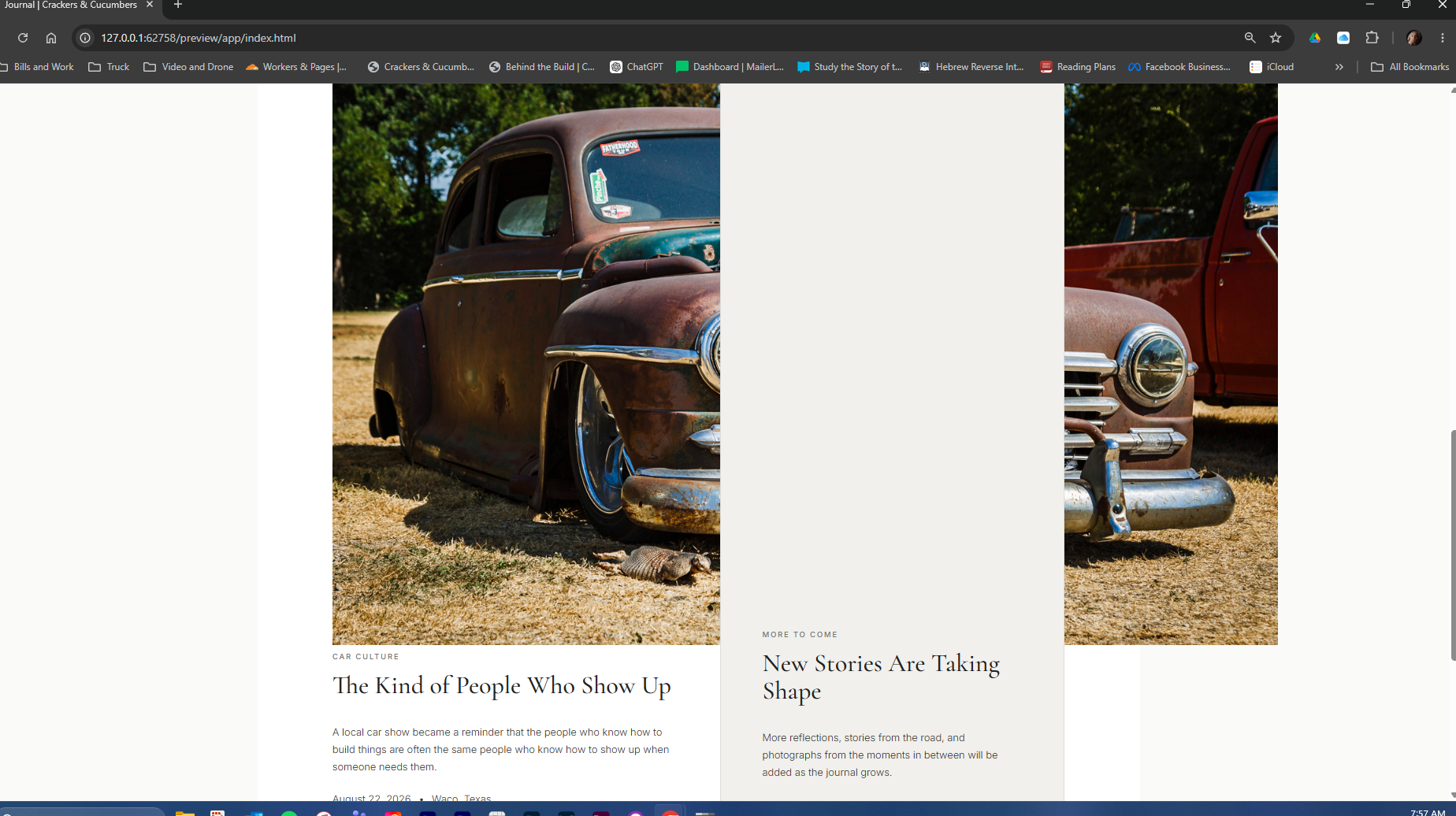
That was when we began to understand the difference between building pages and building a place.
A page exists by itself.
A room belongs to something larger.
The Gallery became a place to wander through individual photographs and discover whatever caught your attention.
Collections became rooms built around a shared place, subject, or idea.
The Journal became the place where a photograph could open into a larger story.
Projects became the place where unfinished ideas could grow in public.
Each section had its own purpose, but they all belonged to the same building.
The photographs also began asking for more.
A photograph could no longer be dropped onto a page with a filename and forgotten.
It needed a name.
Then it needed a reflection.
We started sitting with the images and asking what had made us stop in the first place.
A bicycle hanging above a crowd became Above the Noise.
A juvenile alligator looking through the glass became Ancient Eyes.
Five ducks staring toward something we could not see became The Committee.
Two bridges stretching toward a destination we never reach became Between.
The photographs were no longer just filling the website.
They were beginning to reveal what the website was about.
Mobile was still terrible.
Pages that looked balanced on a large screen collapsed into crowded text, missing margins, oversized photographs, and navigation that seemed determined to escape the browser.
Every fix had to be tested again on desktop, tablet, and phone.
More than once, a correction that solved the mobile layout quietly damaged the desktop version.
But eventually the pages became readable.
Then they became usable.
Slowly, they began to feel intentional.
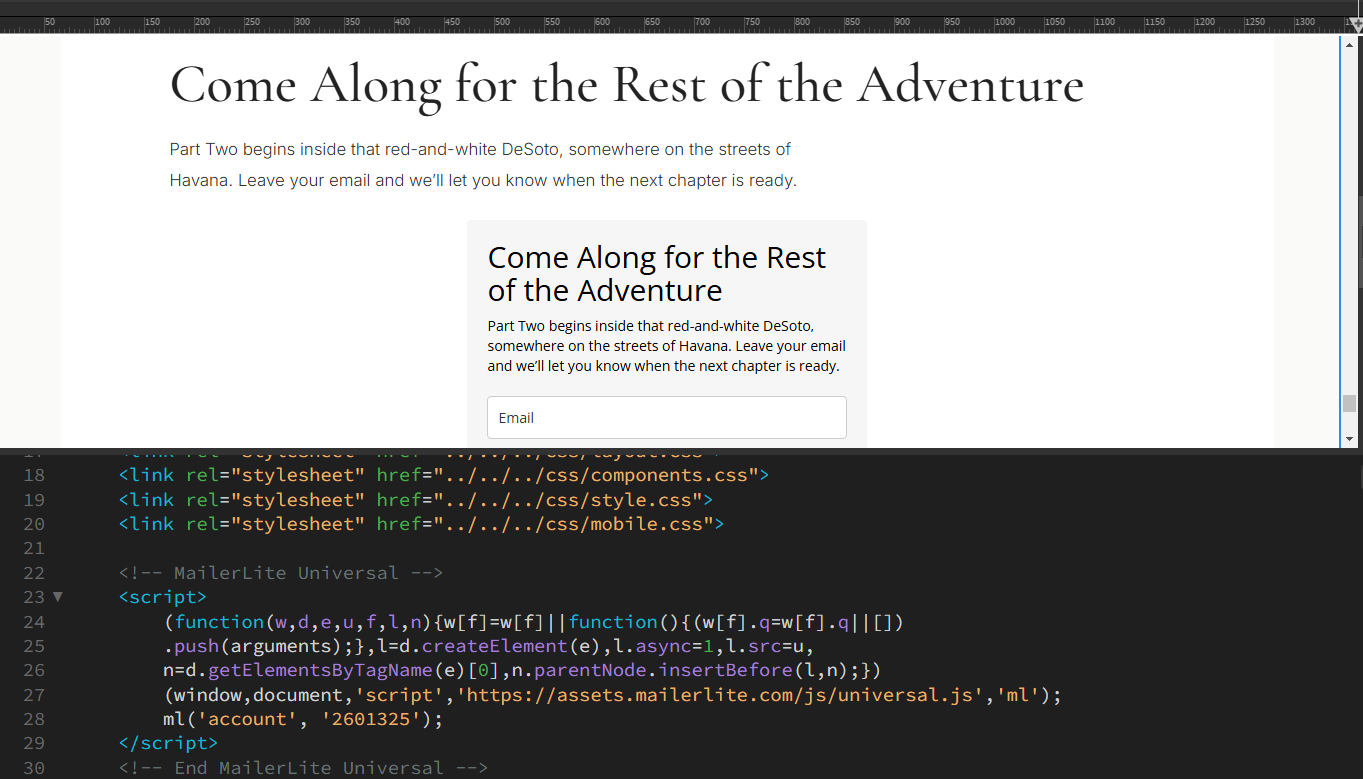
Then came email.
We thought adding a signup form would be simple.
Put in an email address. Press a button. Done.
Instead, we discovered groups, forms, automations, welcome emails, subscriber journeys, embedded code, confirmation pages, and enough settings to make building the website suddenly seem almost reasonable.
But email changed the idea again.
Visitors would not have to stumble back onto the site and hope something new had appeared.
They could choose what they wanted to follow.
Someone could join the general Crackers & Cucumbers list, then separately follow Behind the Build, the Cuba book, Texts From God, or another project that mattered to them.
One person. One email address. Different interests.
The website was not only gaining rooms.
It was beginning to gather people inside them.
We still had unfinished pages.
We still had broken links.
We still had photographs waiting for names, stories waiting to be written, collections waiting to grow, and entire sections that existed mostly as plans.
But the site had crossed a line.
It no longer felt like a collection of files inside a folder.
It felt like a place.
We had stopped building pages.
We were building rooms.
Behind the Build
The Doors Begin to Open
By the next chapter, most of the major structural problems were resolved. Mobile was readable, the Gallery had found its voice, and the site was beginning to resemble the place we had wanted for years.
Read The Continually Open GalleryReturn to Chapter One
Return to Behind the Build